
What we do
Twelve real cardiology services.
Nothing performative.
From same-visit echo and Holter fitting through interventional cardiology at The Nairobi Hospital cath lab, to long-term management of hypertension and diabetes. All delivered by the same team who follow you through the whole pathway.
Diagnostic
Working out what's going on.
The tools we use to answer "is there something wrong, and if so, what?" Most diagnostics are delivered same-visit at the Anderson Centre.
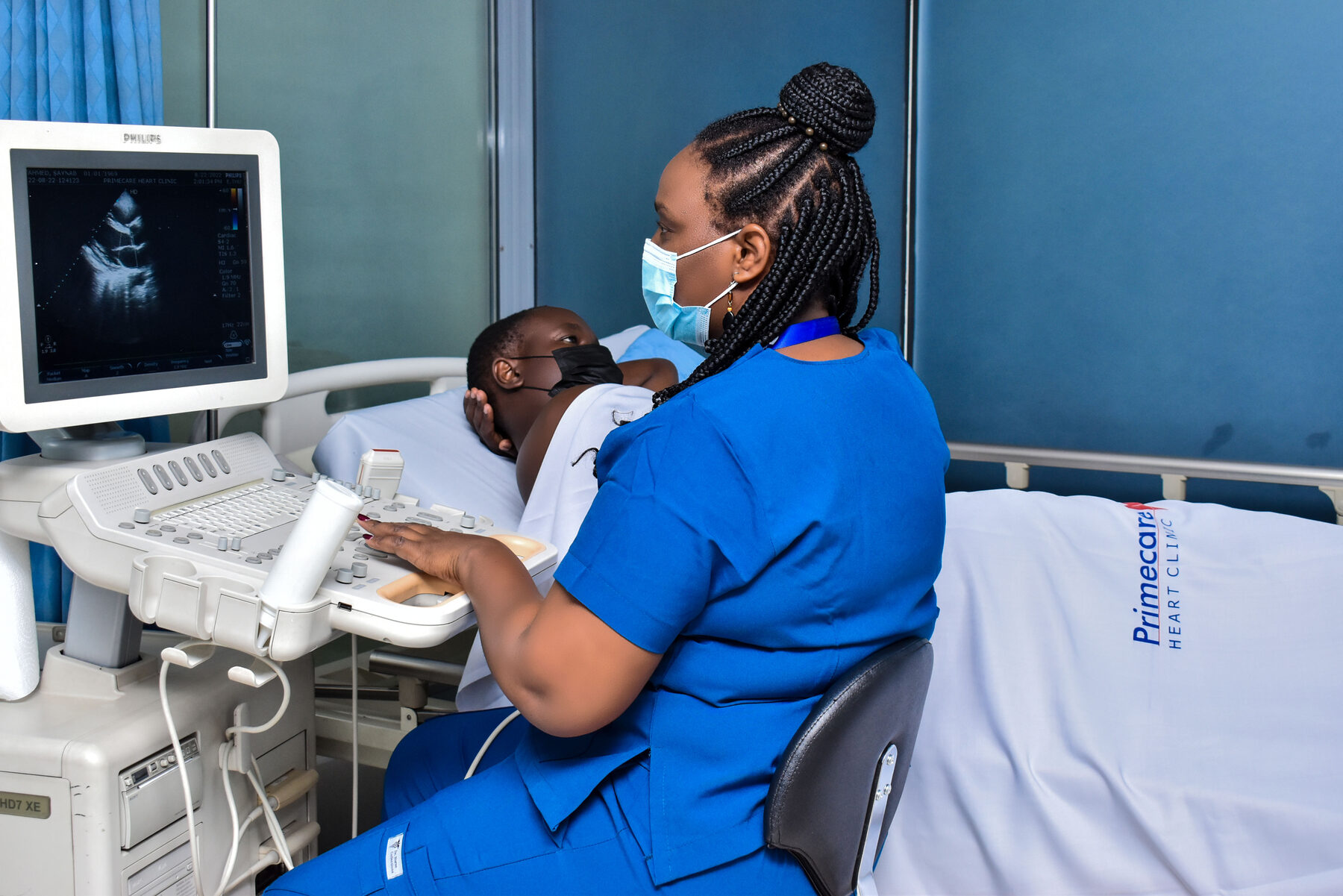
2D Doppler echocardiography
Colour Doppler cardiac imaging to assess heart valves, chambers, and blood flow. Three dedicated machines. Results reviewed the same visit.
Typical duration · 30–45 min
24-hour Holter monitoring
Continuous ECG rhythm monitoring over a full day, the diagnostic of choice for palpitations and intermittent arrhythmia.
Typical duration · 24 hours
24-hour ambulatory BP monitoring
Round-the-clock blood pressure recording to distinguish true hypertension from white-coat readings and guide treatment.
Typical duration · 24 hours
Exercise stress testing
Treadmill test to evaluate heart response under exertion. Common for chest pain workup and pre-surgical cardiac clearance.
Typical duration · 30–60 min
ECG (electrocardiogram)
Standard 12-lead ECG for immediate assessment of heart rhythm and electrical activity. Two dedicated machines, instant results.
Typical duration · 10–15 min
Coronary angiography
Diagnostic imaging of coronary arteries, performed at The Nairobi Hospital catheterisation laboratory. Interpreted by the same cardiologist who sees you in clinic.
Typical duration · 1–2 hours
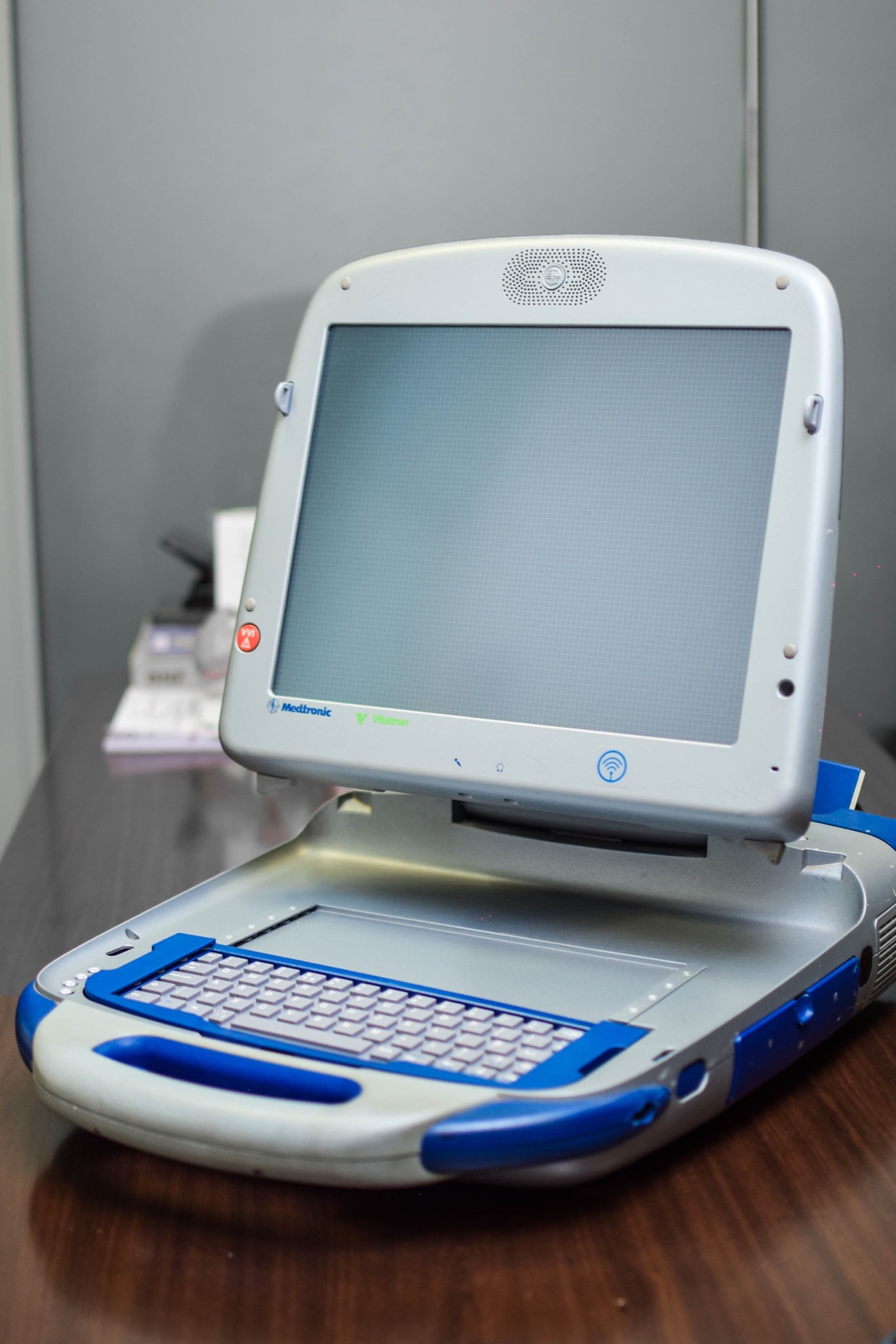
Inside the clinic
The equipment behind the diagnosis.
Not outsourced, not referred out. The echo, the stress test and device programming happen here, run by our own team.
Interventional
Fixing what's found.
Procedures done at The Nairobi Hospital catheterisation laboratory. The cardiologist who sees you in clinic is the one who performs the procedure, continuity through the whole care pathway.
Coronary angioplasty & stenting
Minimally invasive procedure to open blocked coronary arteries and restore blood flow to the heart muscle.
Typical duration · 1–3 hours
Pacemaker implantation
Single- and dual-chamber pacemakers for patients with symptomatic bradyarrhythmias and conduction disease.
Typical duration · 1–2 hours
CRT-D & ICD implantation
Cardiac resynchronisation therapy defibrillators and implantable cardioverter defibrillators for advanced heart failure and inherited arrhythmia risk.
Typical duration · 2–3 hours
Device programming & follow-up
Regular optimisation of implanted pacemakers, CRT-D, and ICD devices, including battery status and lead performance checks.
Typical duration · 30 min
Long-term care
Managing what stays.
Most cardiovascular disease is chronic. These are the appointments most patients spend most of their time on. Quiet, essential, done well.
Cardiology consultation
Full assessment and individualised care plan for cardiac symptoms, family history workup, and second opinions. You see the same cardiologist every visit.
Typical duration · 30–45 min
Preventive cardiology & risk-factor management
Long-term management of hypertension, diabetes, dyslipidaemia, and other cardiovascular risk factors. Focus on preventing progression before it starts.
Typical duration · 30–45 min
Who we help
Cardiology is a broad field. These are the four groups we see most.
Symptomatic patients
Chest pain, palpitations, breathlessness, dizziness, syncope, unexplained fatigue.
Chronic-disease patients
Hypertension, diabetes, high cholesterol, established heart failure or arrhythmia.
GP referrals
Second opinions, pre-surgical cardiac clearance, specialist workup on abnormal findings.
Family-history + preventive
Baseline cardiac assessment when a parent or sibling has cardiovascular disease.
Not sure which service you need?
Book a consultation and we'll work it out together. No appointment needed to call and ask.